Architecture · Technology · Products · People
下滑阅读更多
2020 — Now
An Ongoing Exploration
I have been exploring where I might fit within architecture — and, increasingly, where architectural thinking might contribute beyond architecture.
01 / 2020–2022
Learning the Language of Architecture
I began with the fundamentals of architecture — space, form, structure, representation and the tools needed to turn ideas into something visible.
Competitions and early projects gave me confidence in design. But as I learned how to design, another question gradually became more important:
Where do I want to position myself within this field?
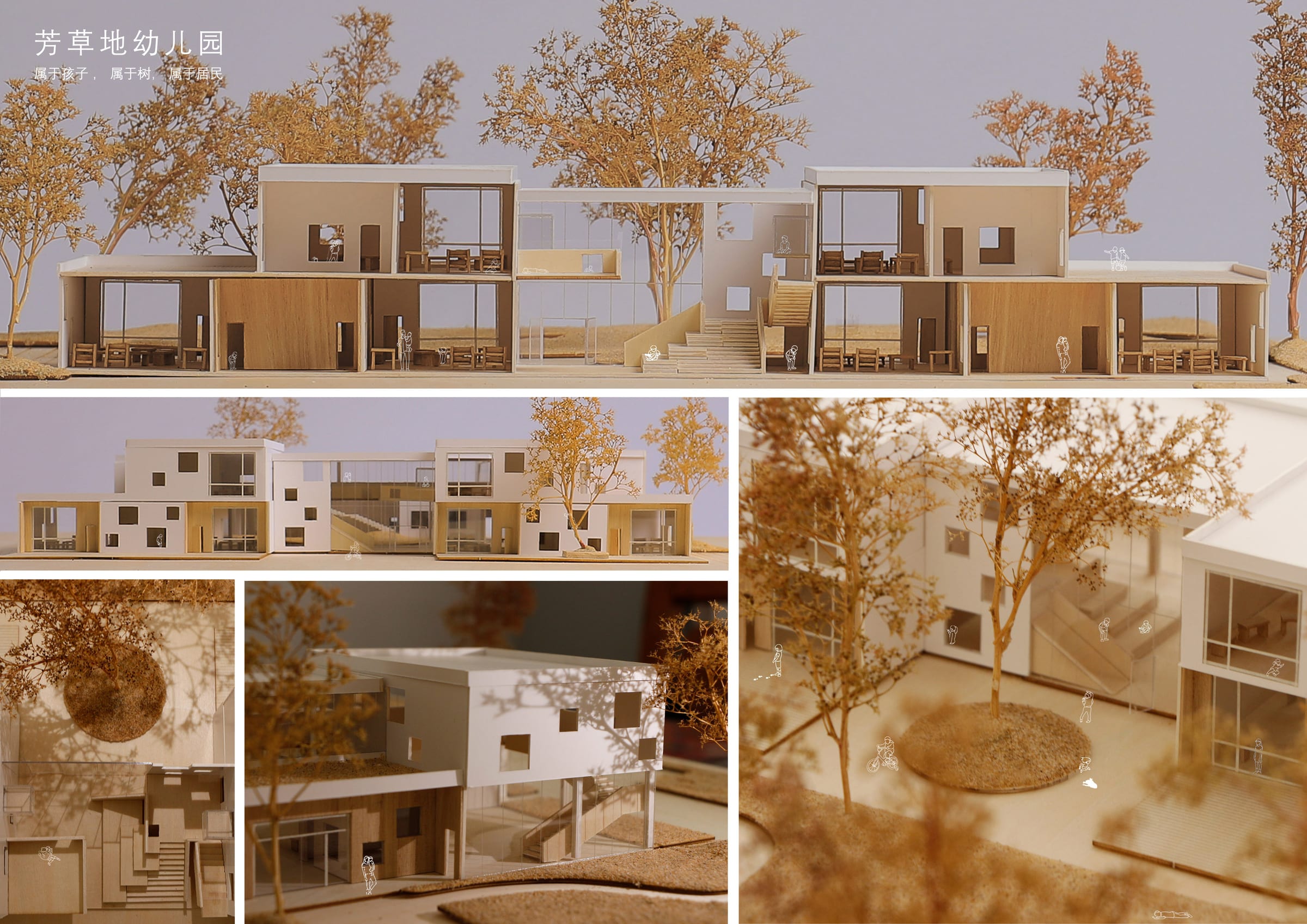
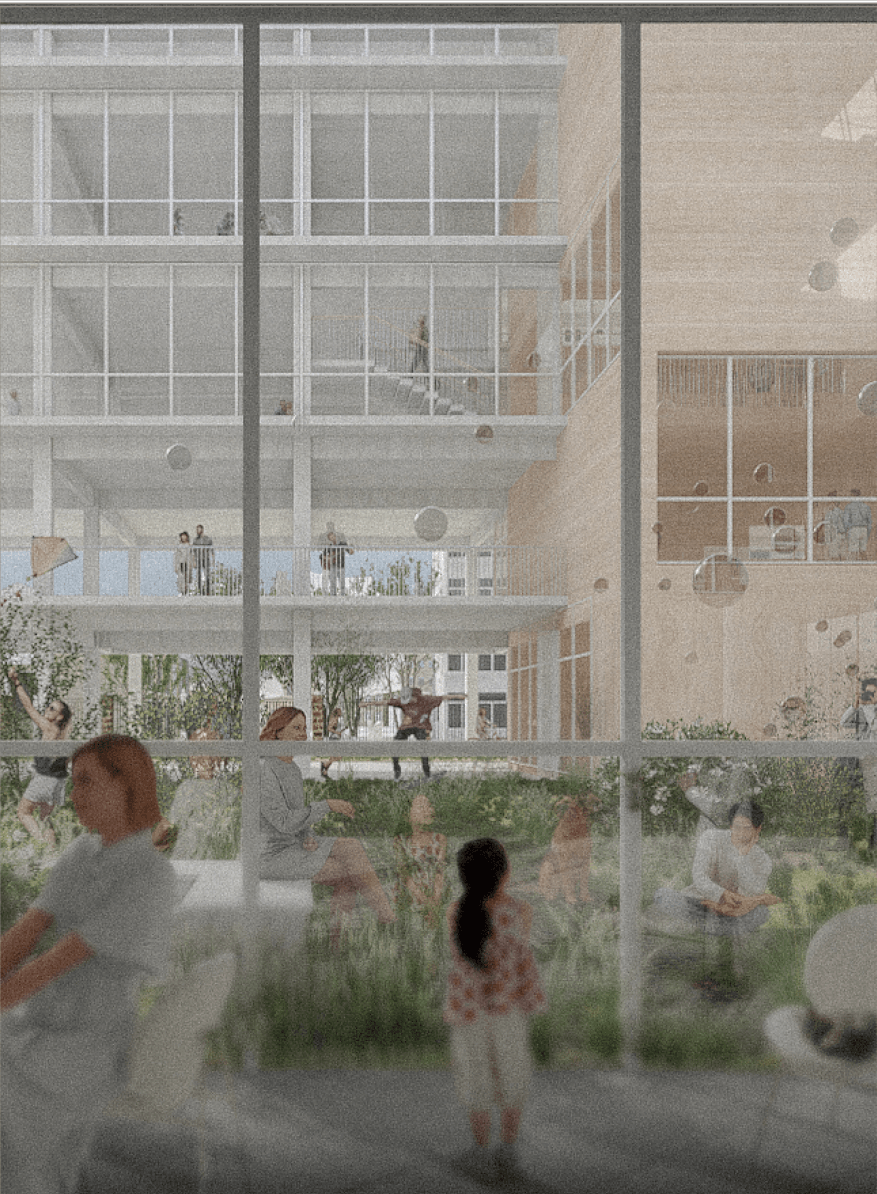
China Architectural Rookie Contest
2021–2022 · Architectural Design
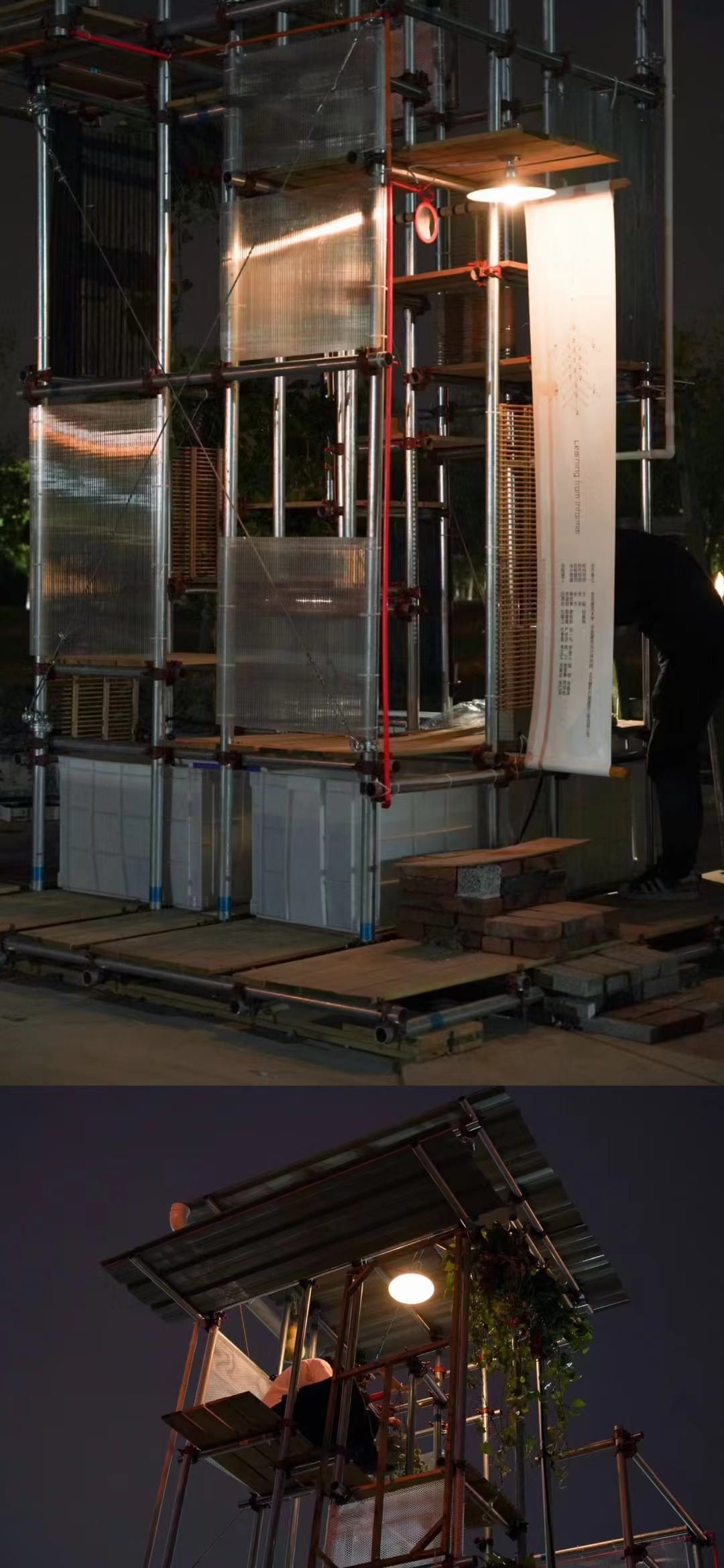
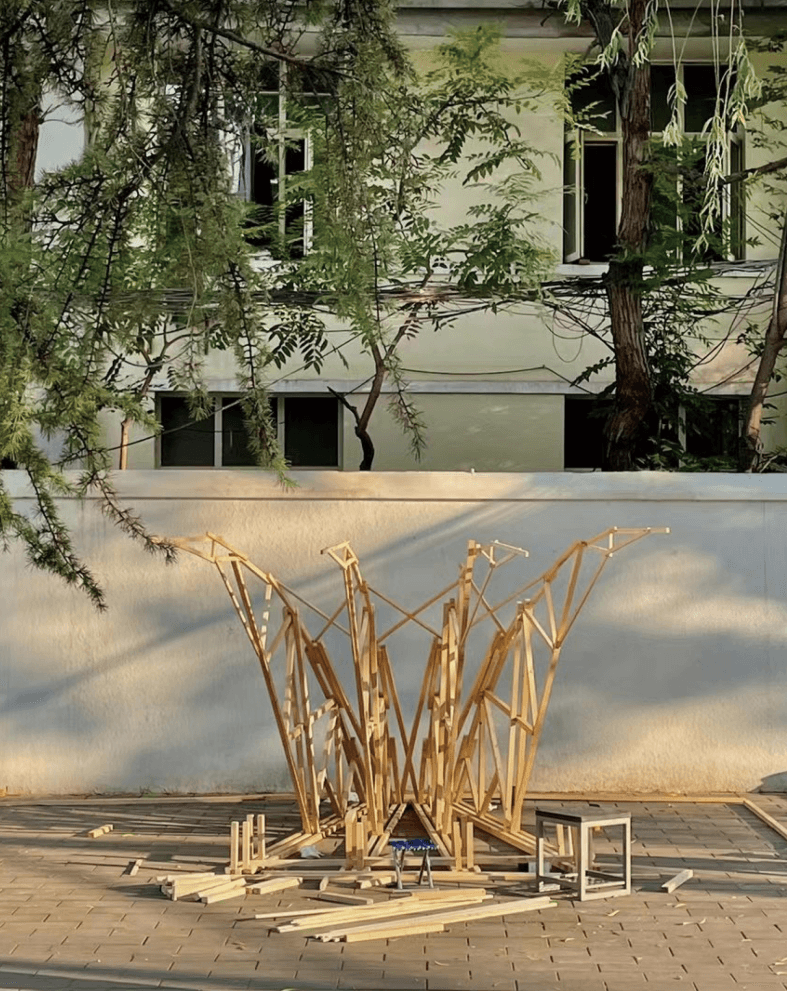
Shanzhai — Beijing International Design Week
2021 · Material reuse / Installation

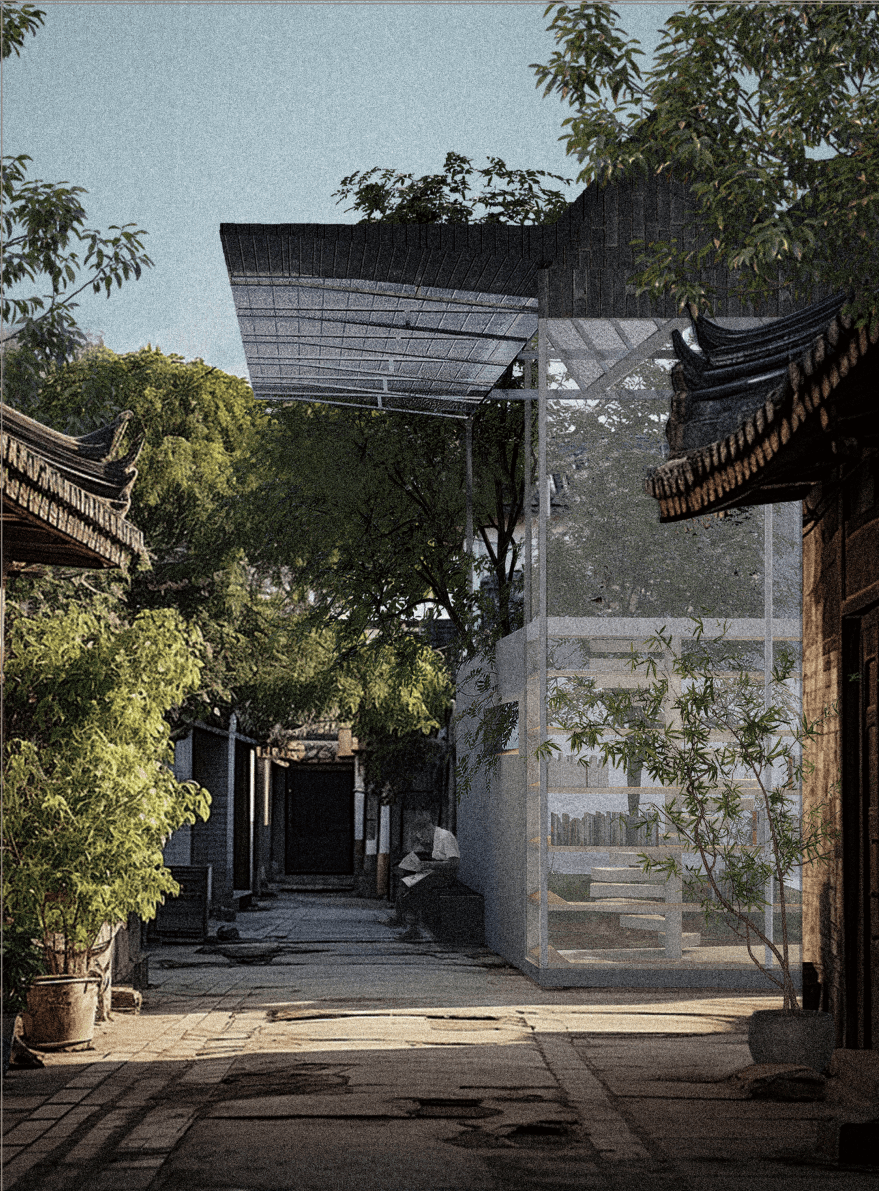
Environmental Improvement of Xisi & Xidan Streets
2021 · Urban observation / Renewal
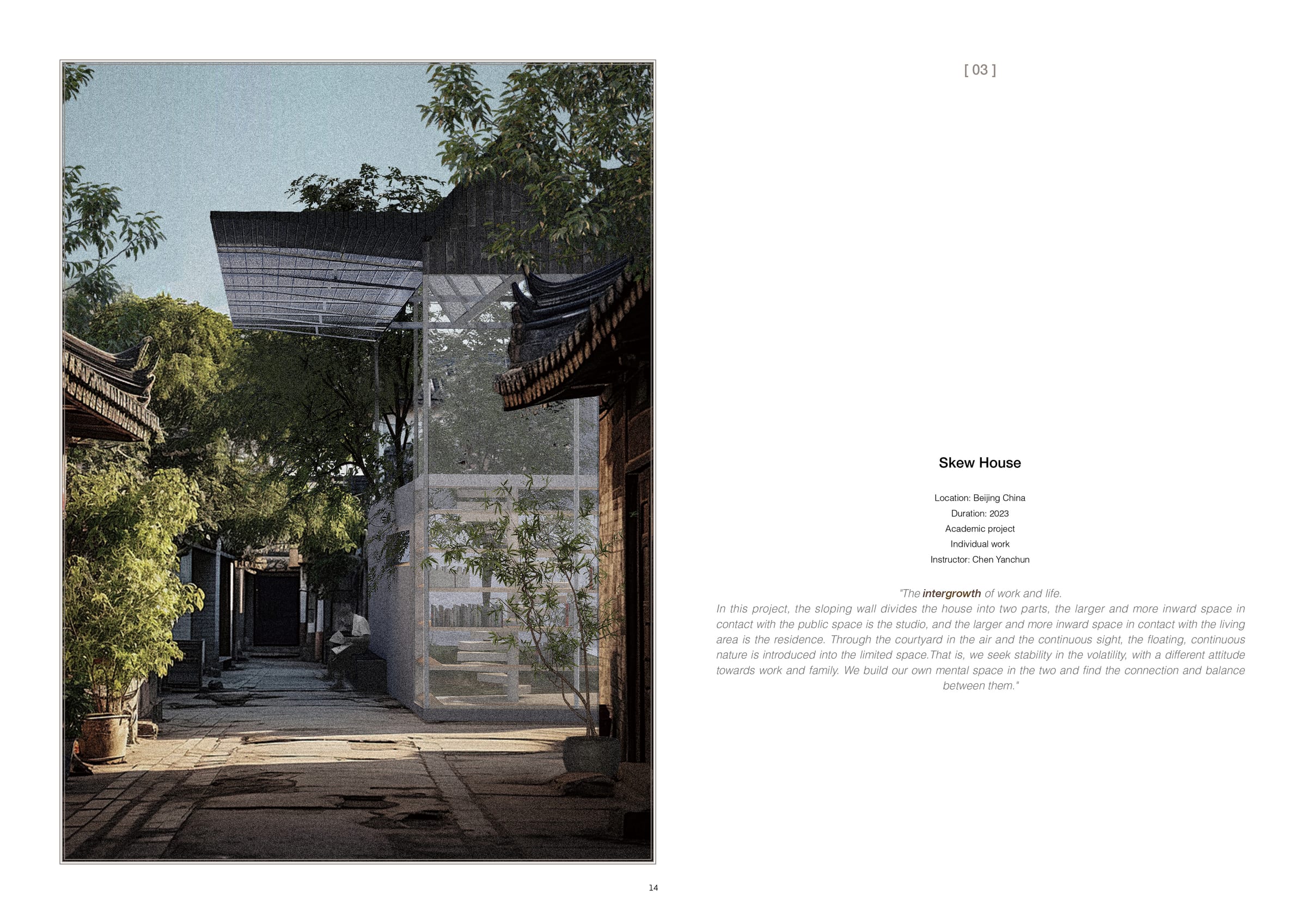
Architecture as a Personal Language
Before architecture became a profession to explore, it was also a way for me to think and feel.
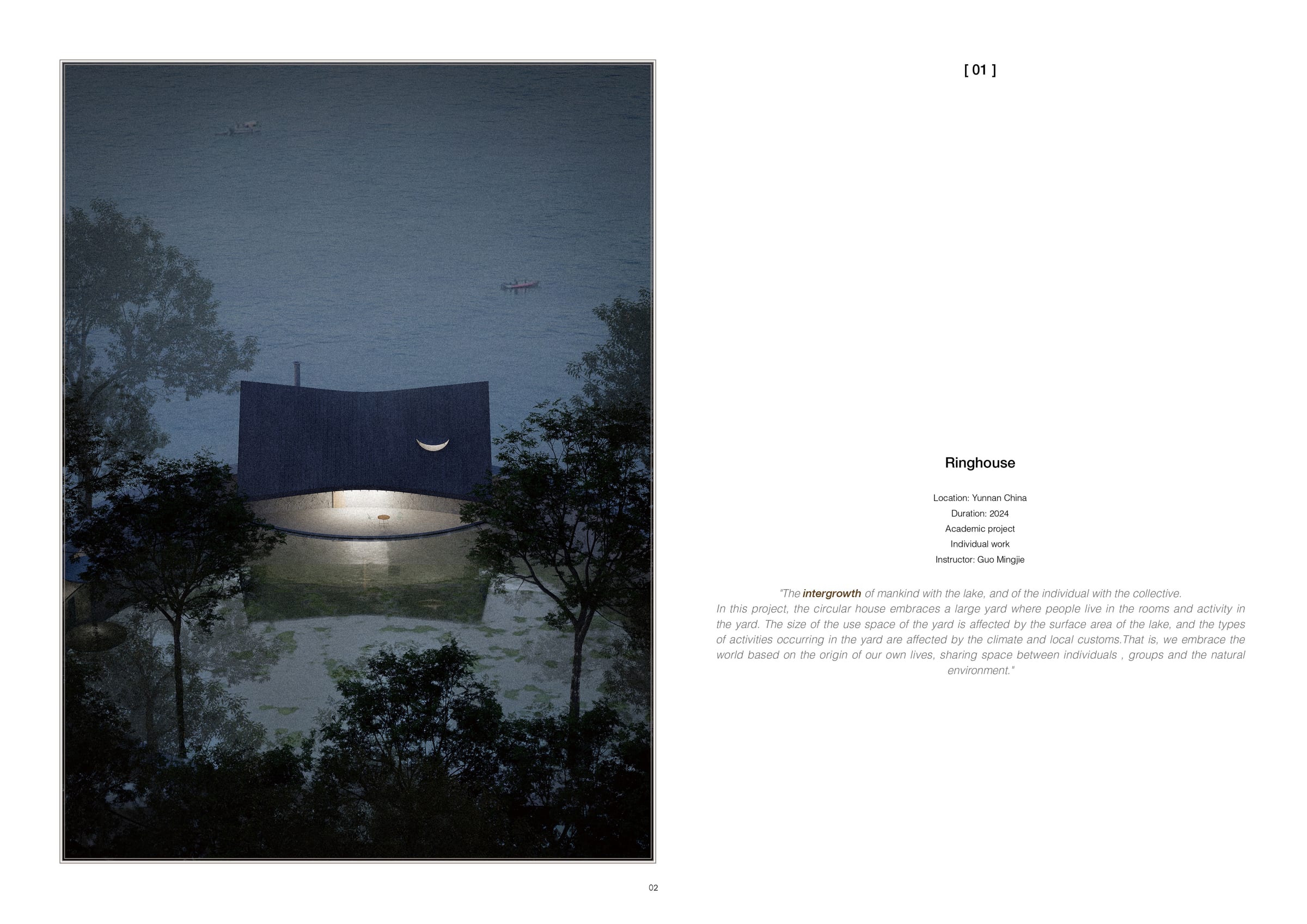
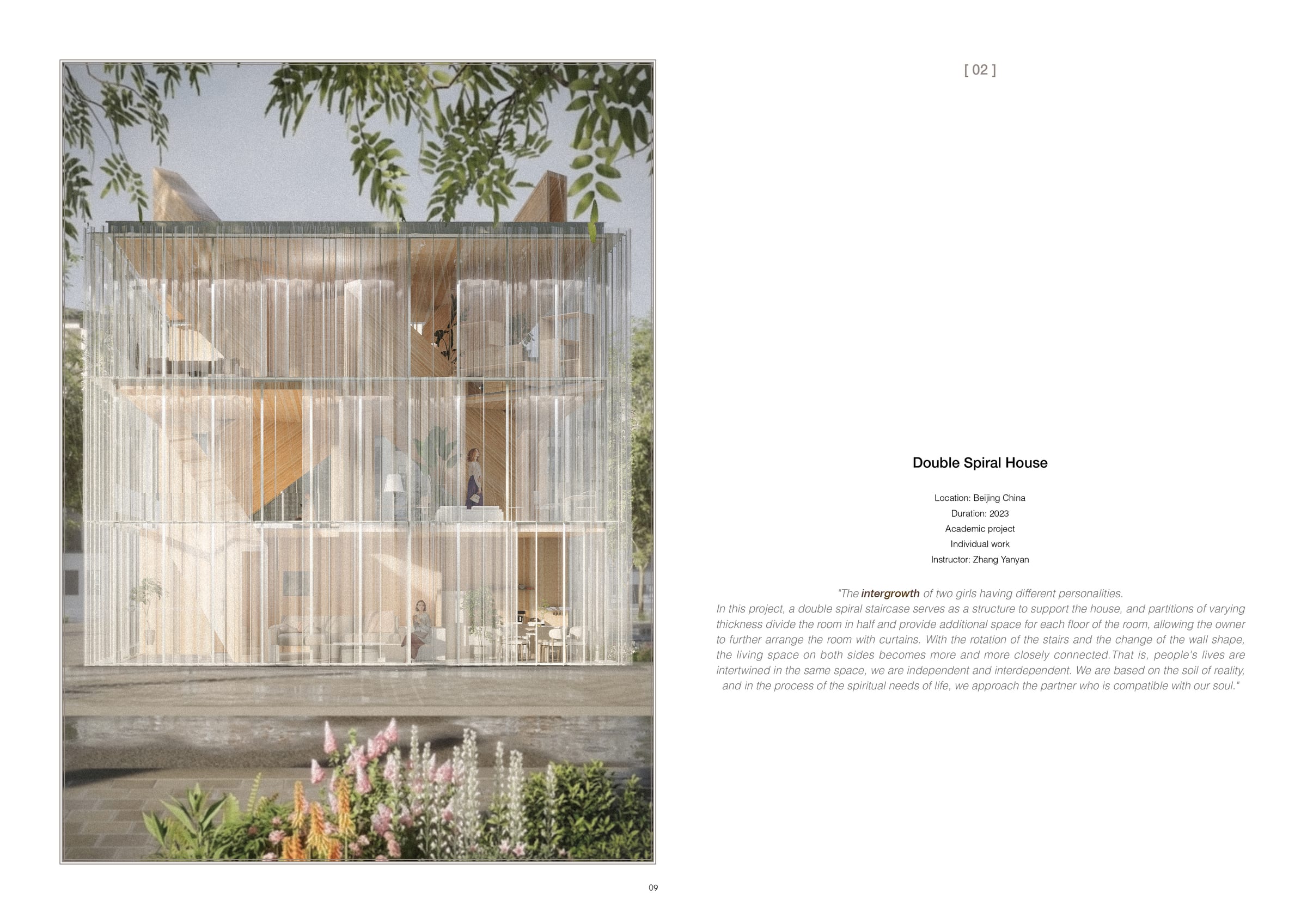
Through a series of small architectural projects, I explored relationships between work and life, one individual and another, memory and place, and the individual and the collective.
02 / 2023–2024
Exploring the Profession
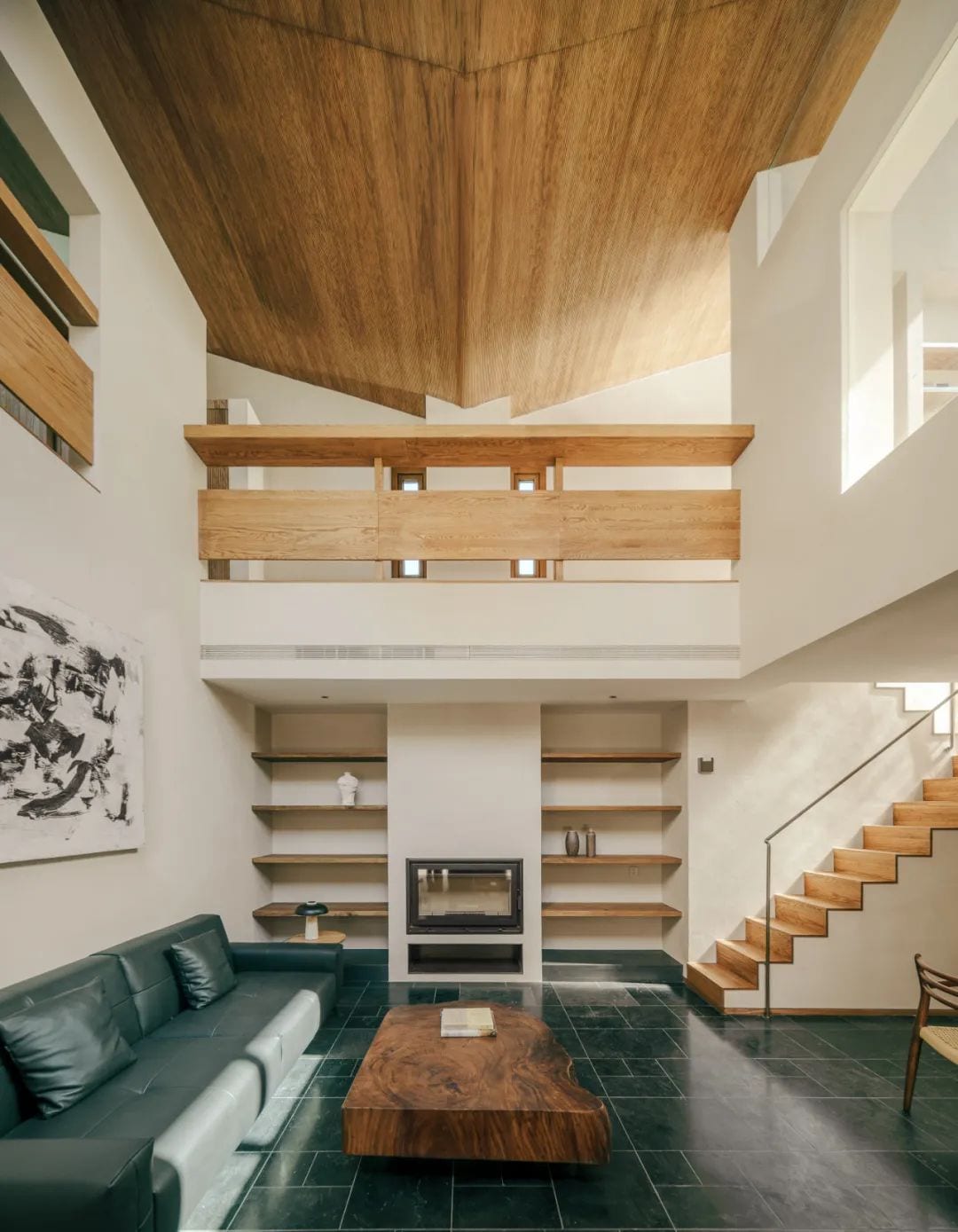
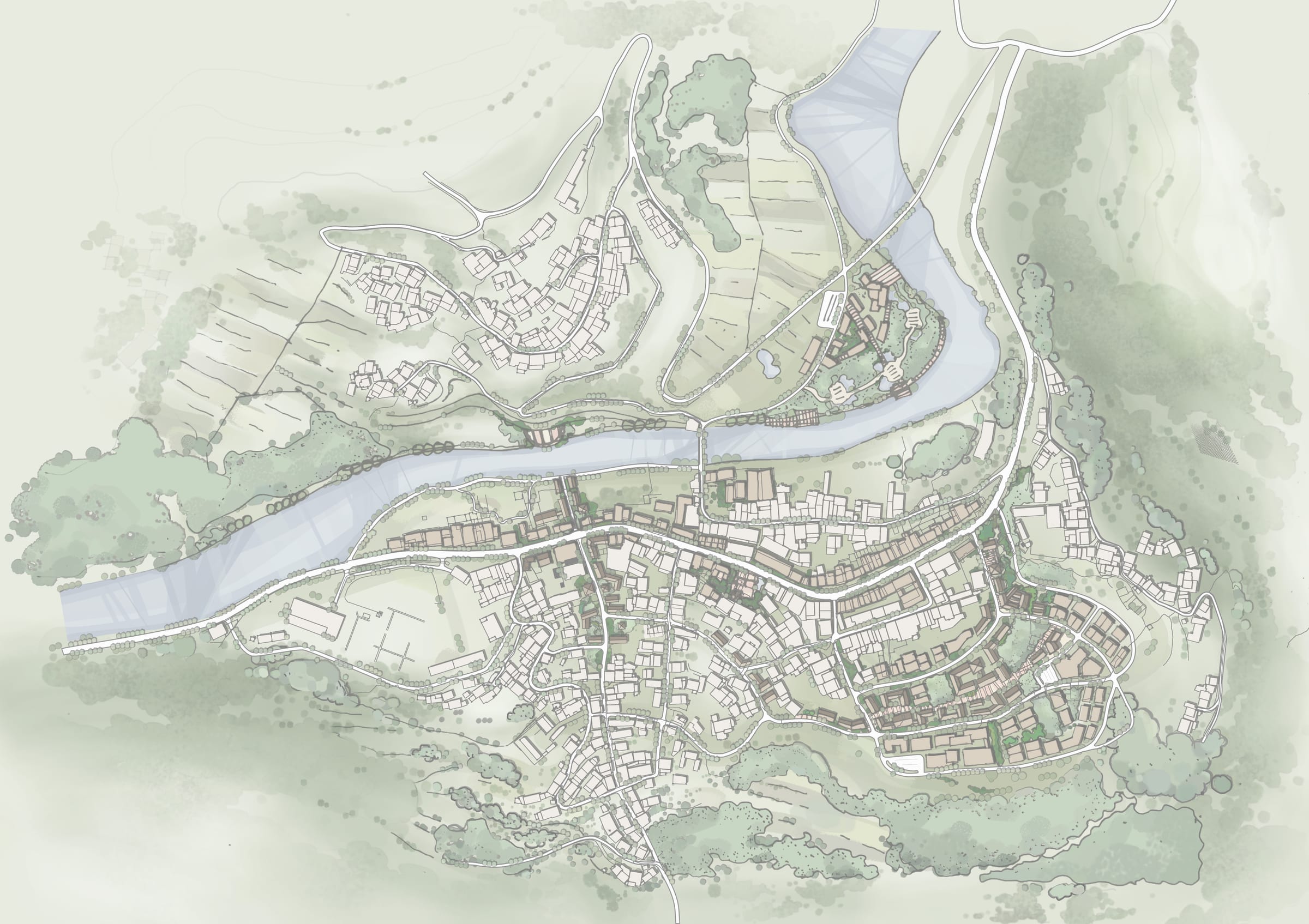
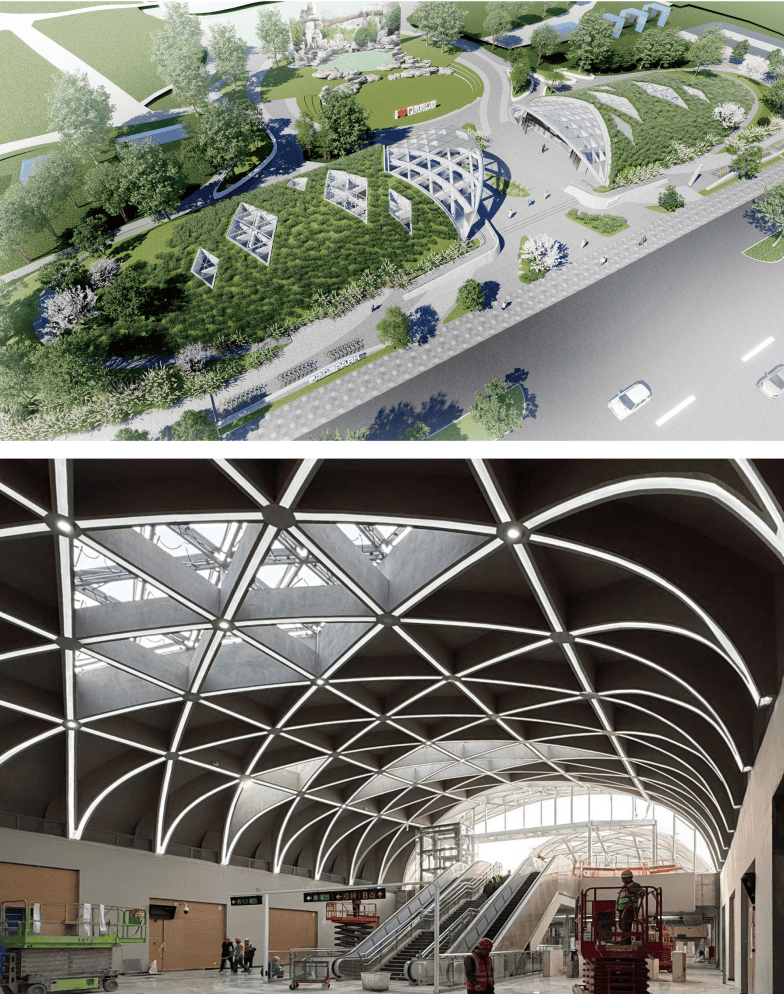
From my third year, I began deliberately exploring different scales and contexts of architectural practice.
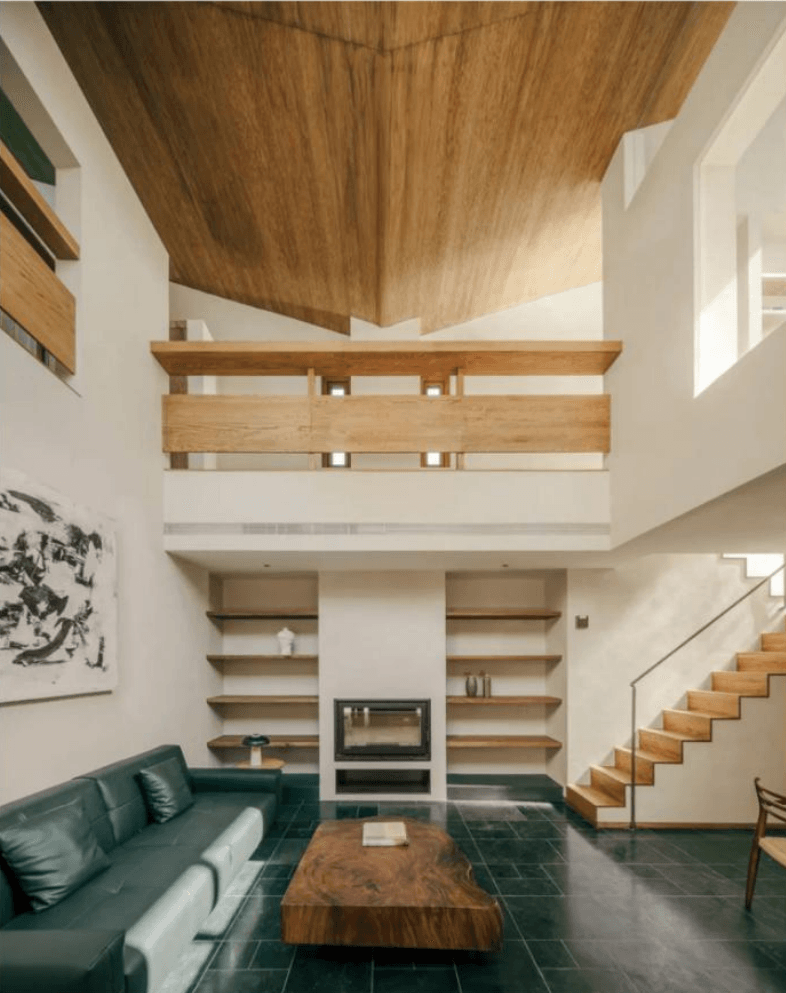
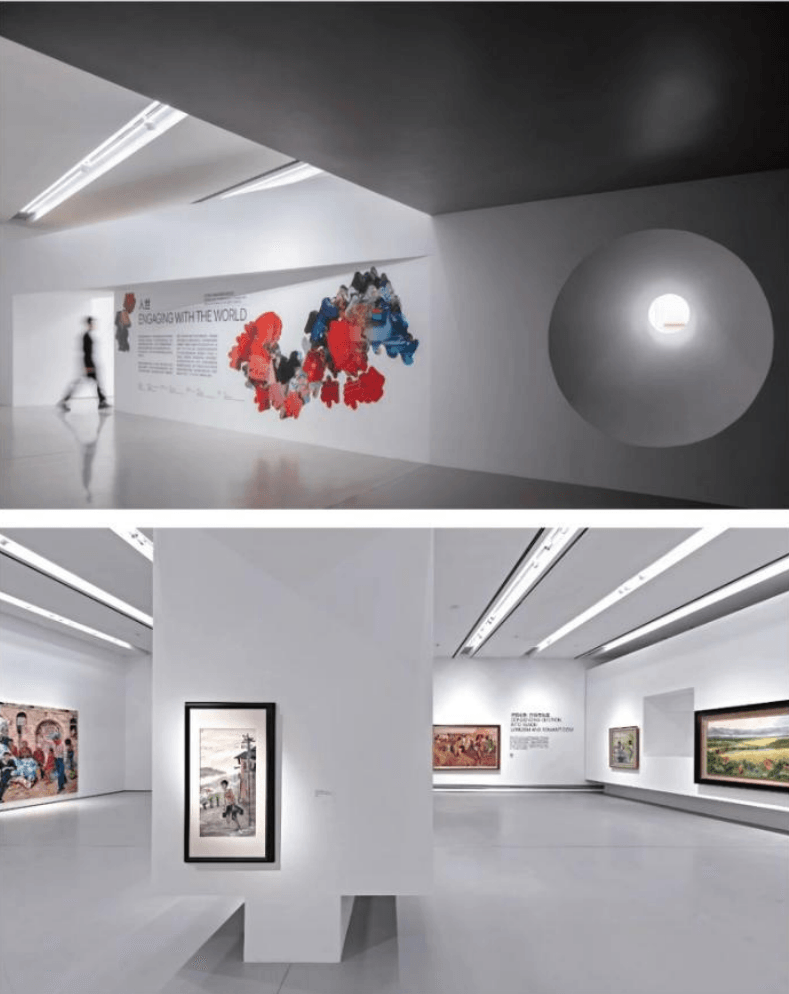
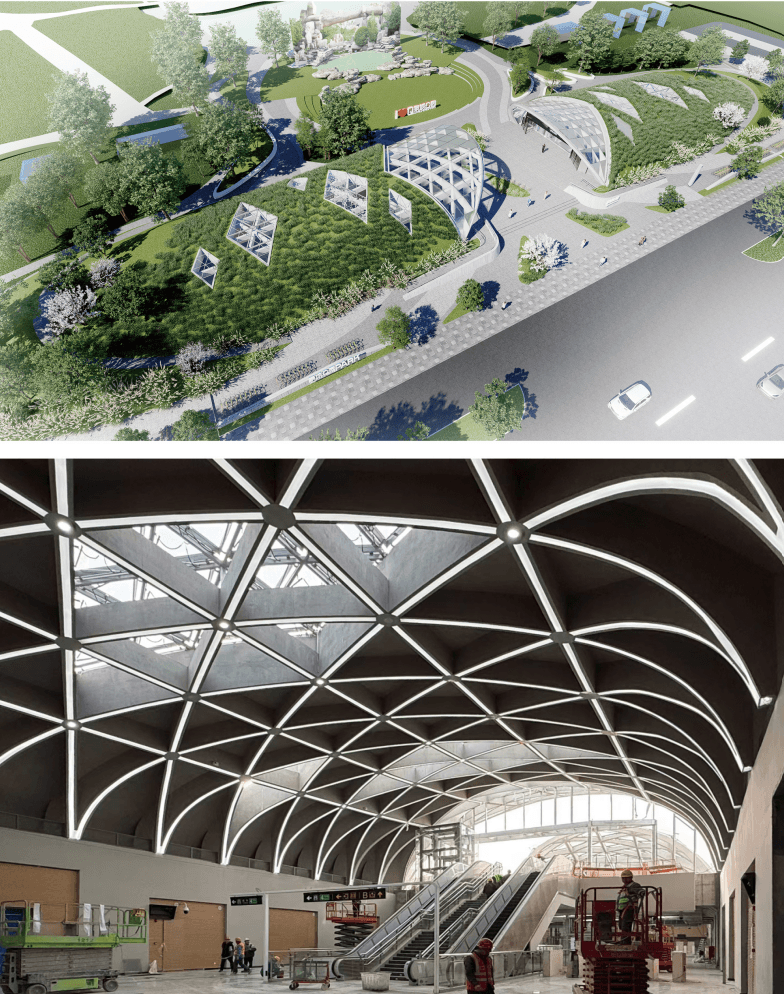
I moved from residential and exhibition design, where I encountered materials and construction up close, to rural planning and cultural tourism, and later to urban renewal, metro stations and TOD projects.
I was trying to understand not only what I enjoyed designing, but where I could contribute within the profession.
03 / 2023–2025
Understanding Complexity
For three years, I studied alongside practising architects at CADG, working with real sites and project contexts before completing my graduation project on the adaptive reuse of an ageing residential community.
I began to understand that architecture is shaped not only by space, function and users, but also by land, policy, economics, resources and coordination.
I started to see the architect less as someone who simply produces a design, and more as someone who coordinates constraints, people and possibilities — and moves an idea towards reality.
04 / 2022–2025
Questioning What Architecture Can Do
Alongside practice, I kept exploring where spatial thinking could contribute — from healthcare and ageing to rural regeneration, material culture and adaptive reuse.
These experiences made architecture feel less like a category of objects and more like a way of understanding needs, systems and relationships.
But they also left me with another question:
Does every spatial problem need to be answered with another building?
Perhaps design could offer more adaptable, personalised and sustainable ways for people to shape their own environments.

Medical Architecture × Cornell University
Healthcare / Wayfinding
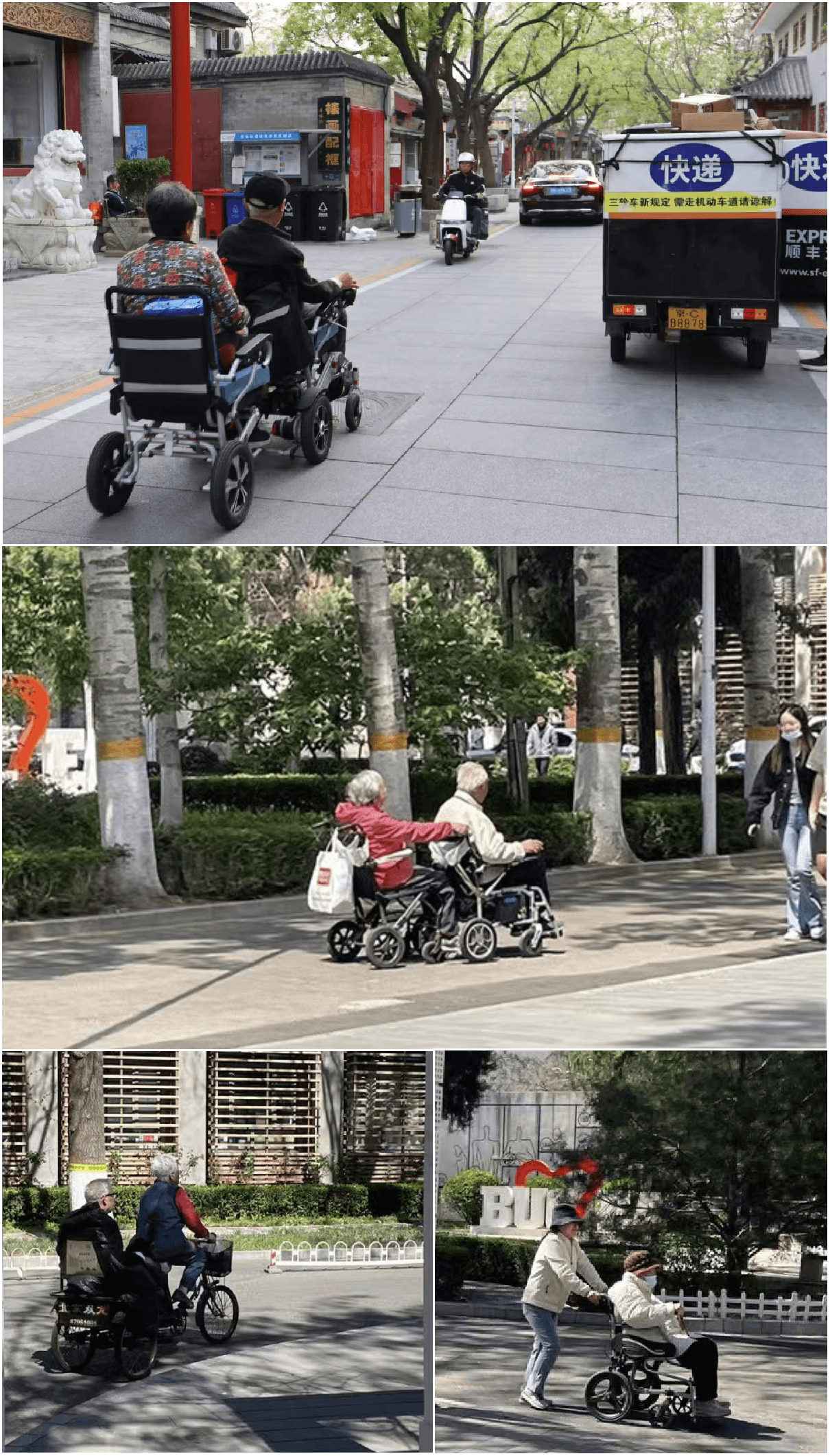
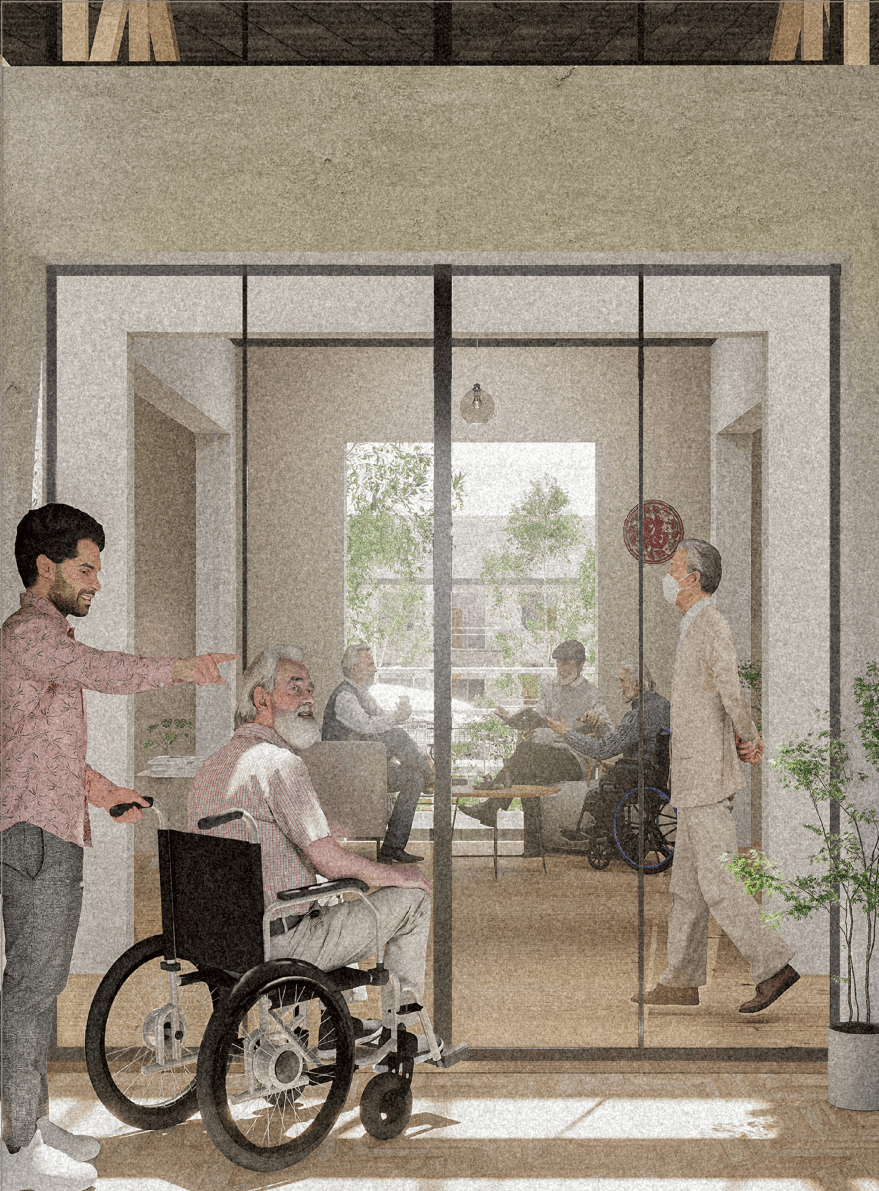
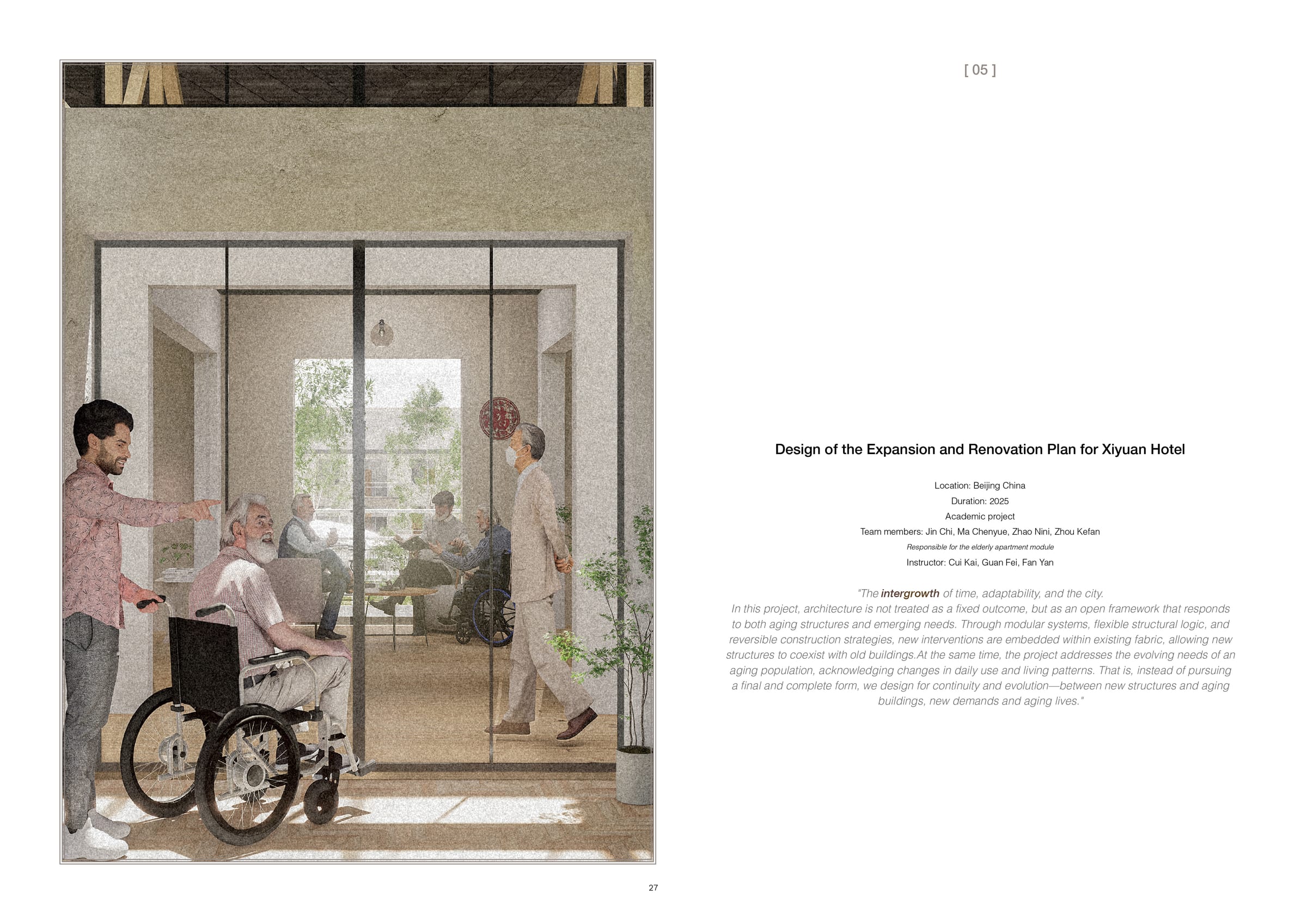
Graduation Design
Ageing / Adaptive Reuse
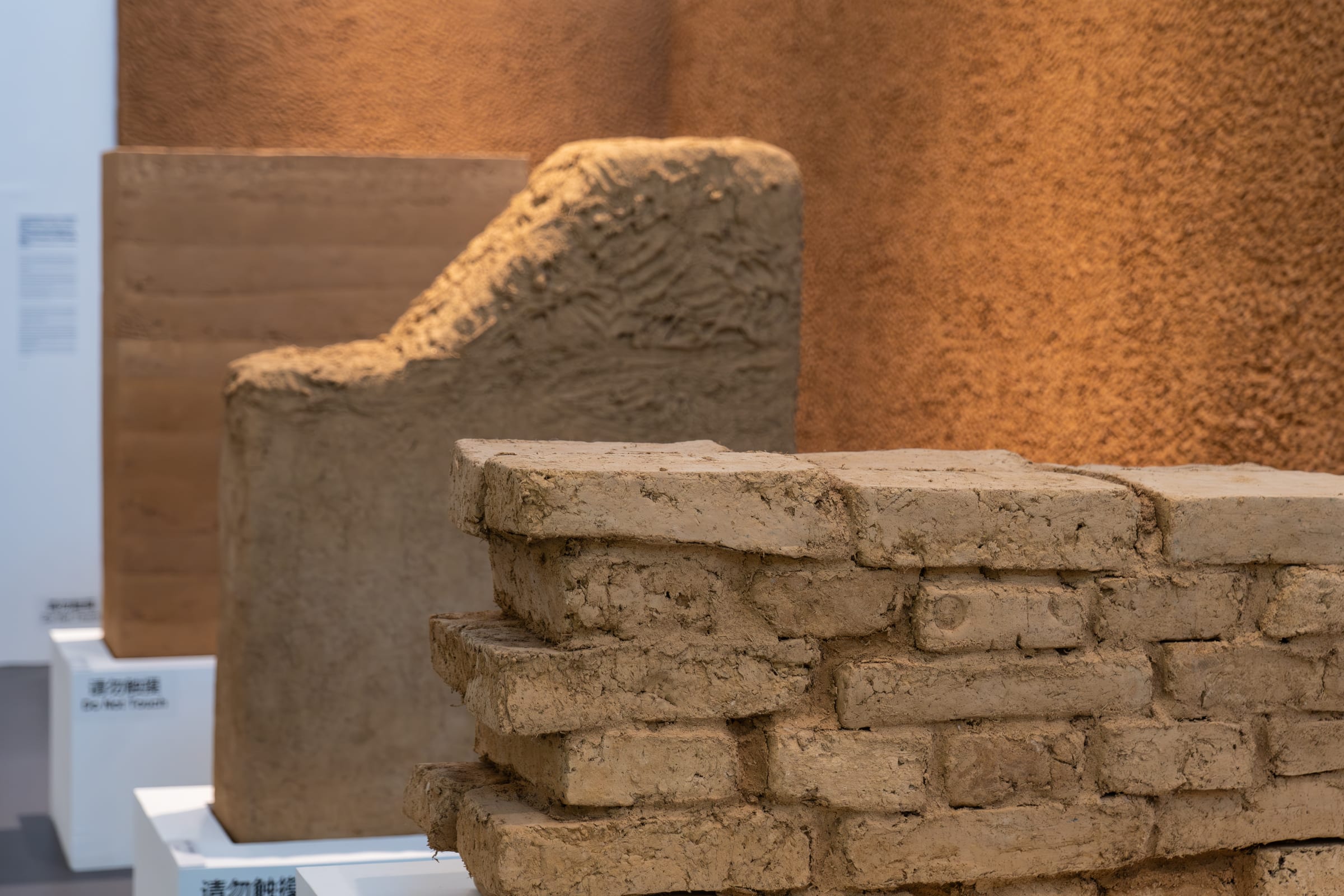
National Museum of China × ALIPH
Material Culture / Earthen Construction
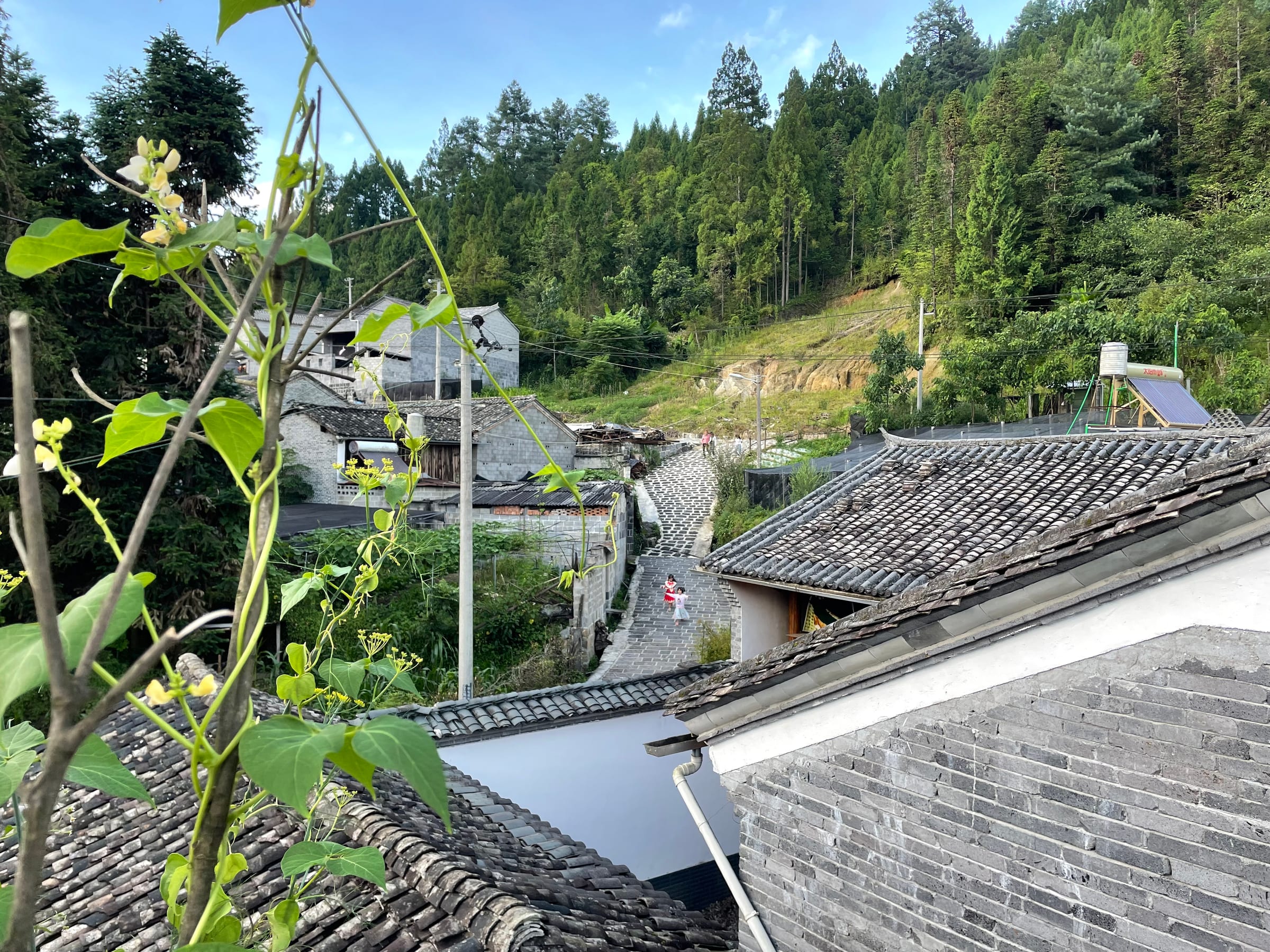
Rural Revitalization Work Station
Rural Development / Community
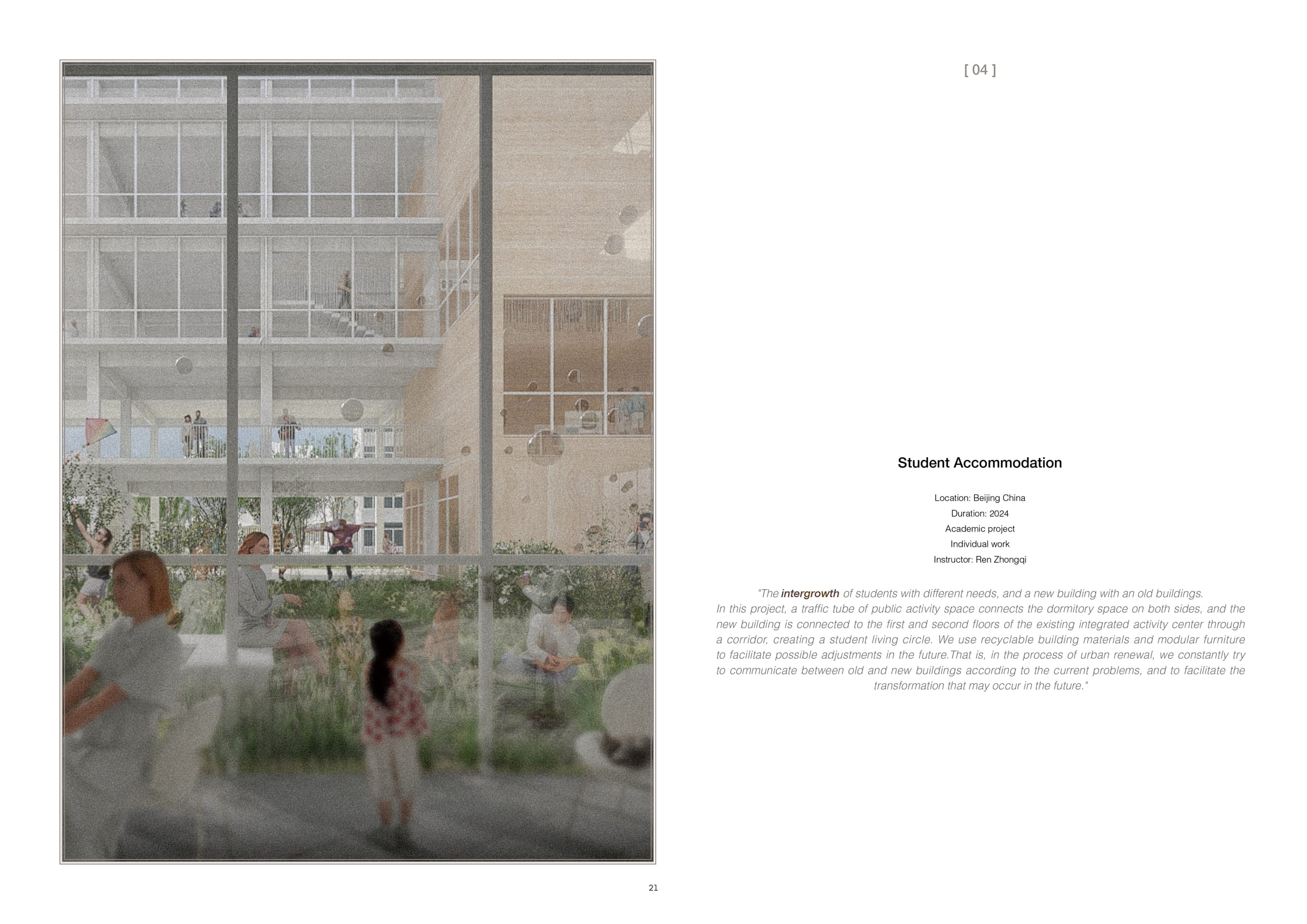
Student Accommodation
Designing for change, not a fixed outcome.
05 / 2025–2026 · London
Expanding Beyond Architecture
Moving to London coincided with a rapid change in the way I learned and worked.
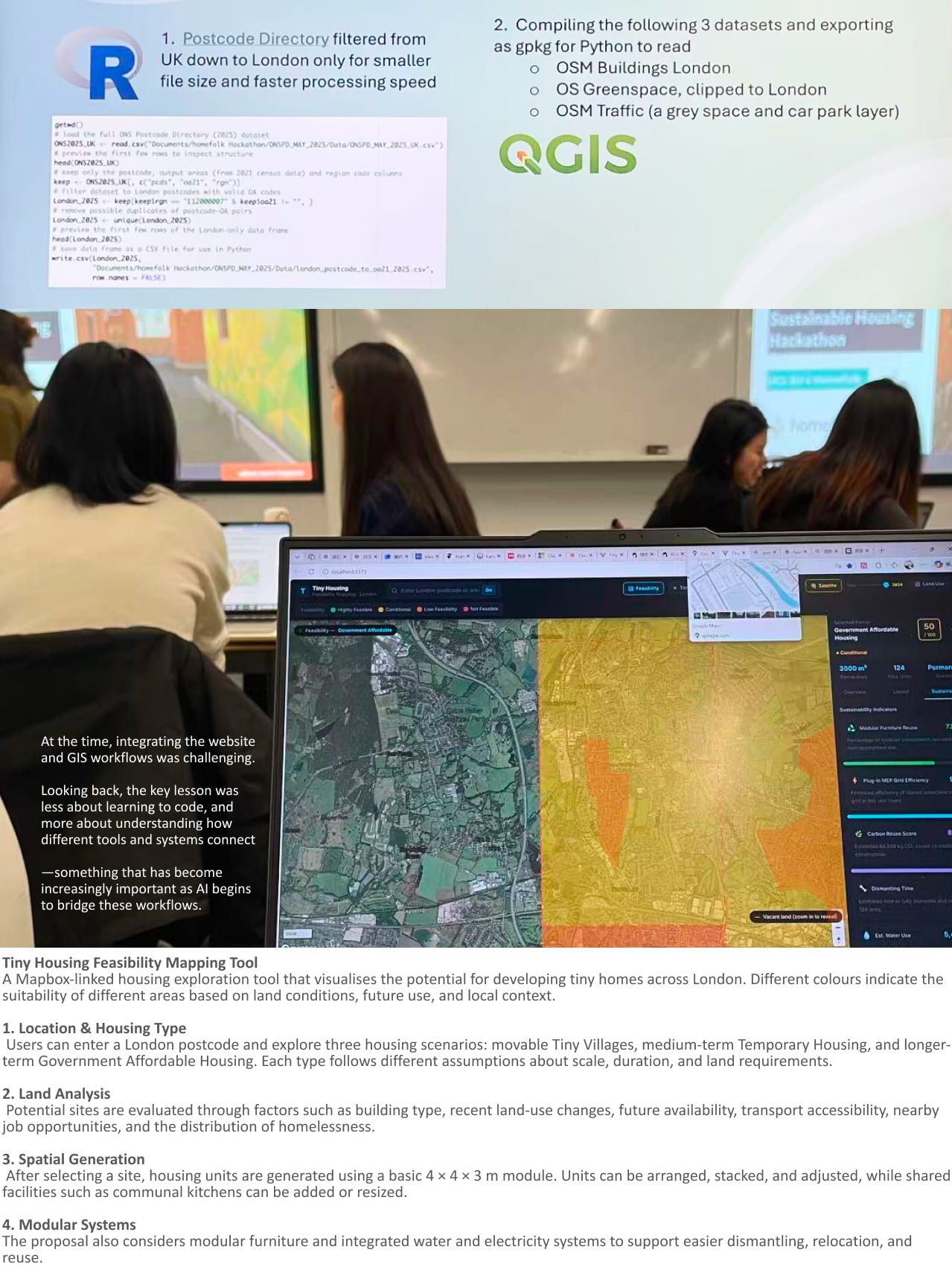
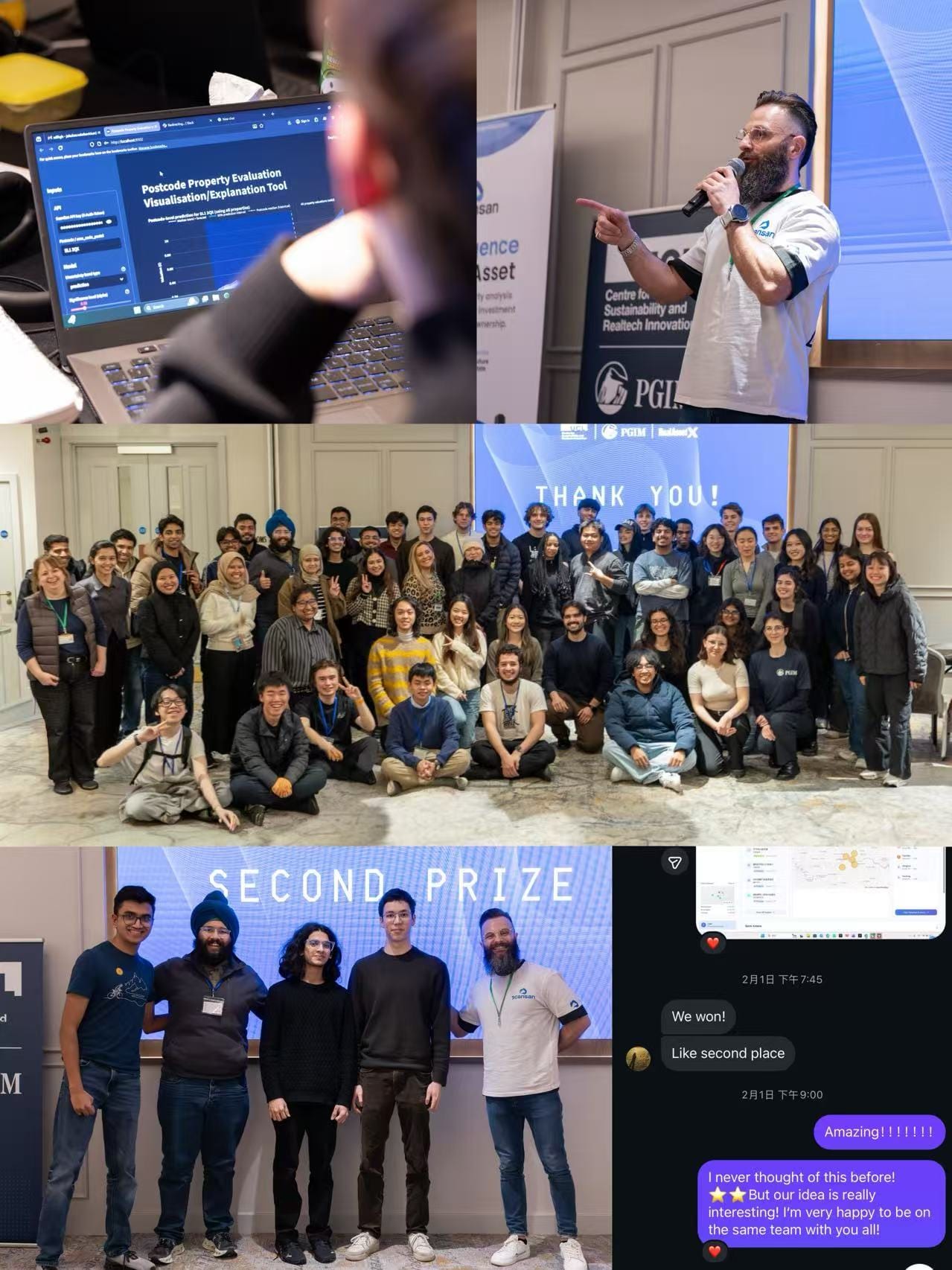
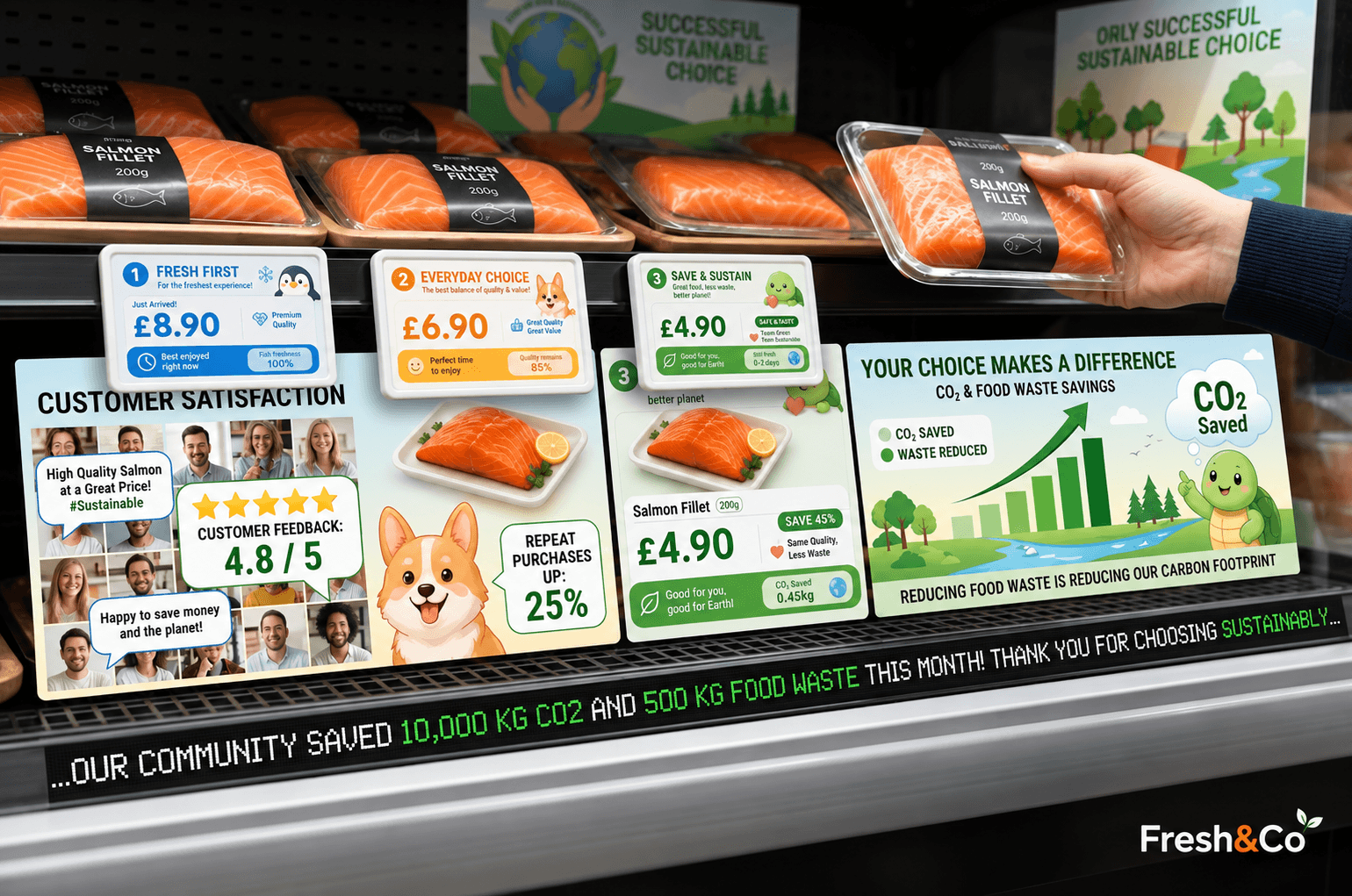
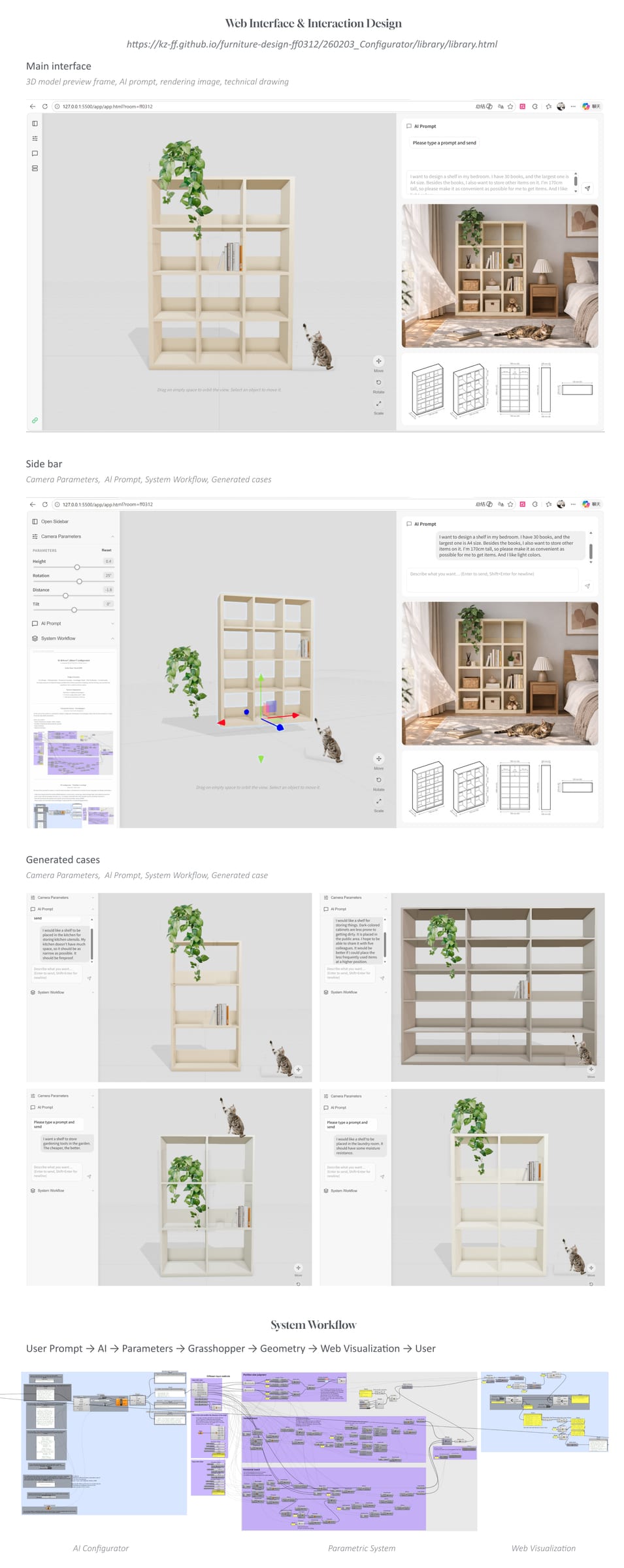
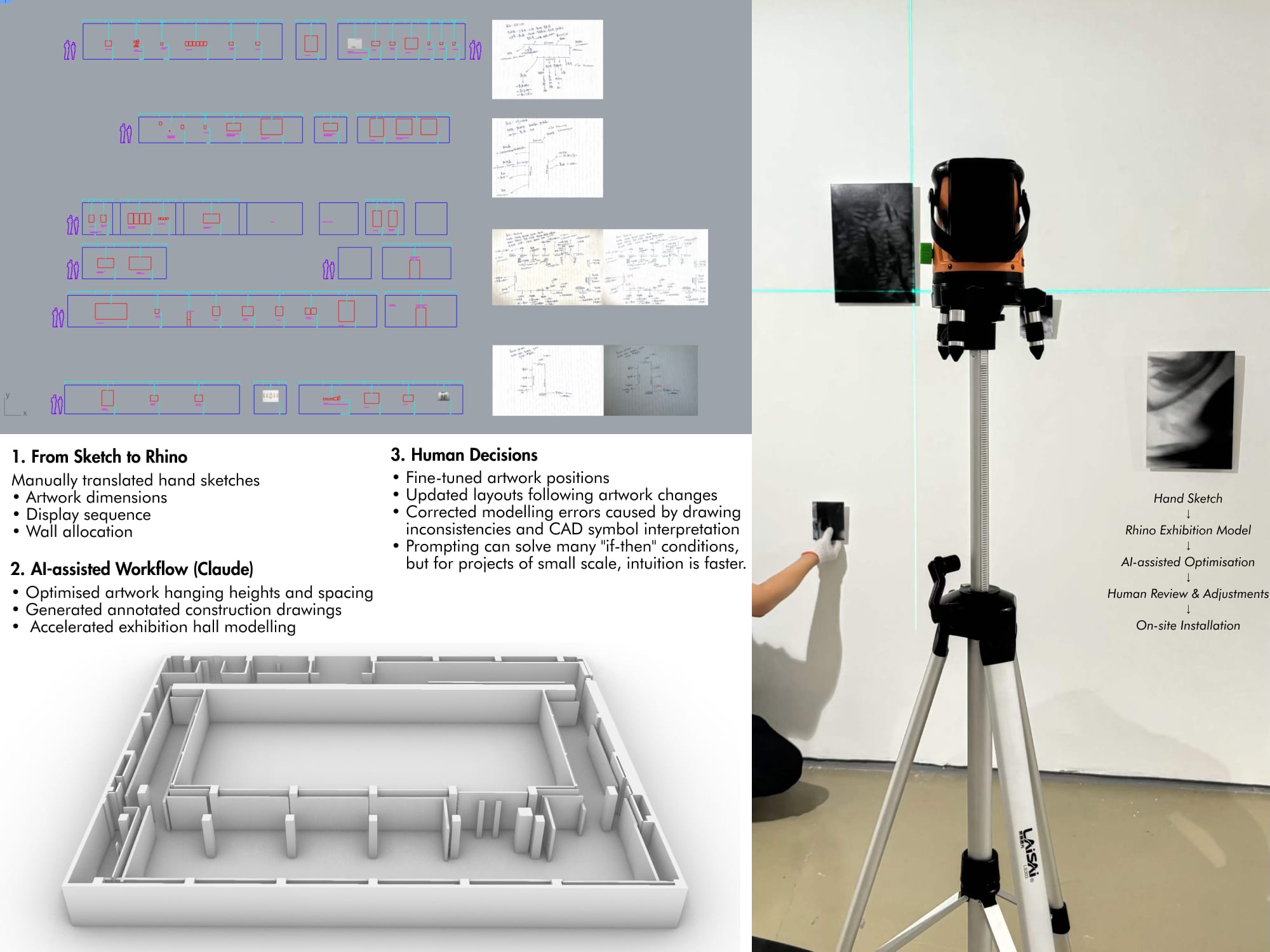
AI lowered many of the technical barriers between an idea and a working prototype. I began collaborating beyond architecture and experimenting with questions at very different scales — housing and urban data, healthcare systems, cultural memory, food waste, digital exhibitions and personalised products.
What interested me was no longer only the spatial outcome.
I became increasingly curious about how design thinking, technology and accessible tools could help people recognise and respond to their own needs.
06 / 2026
Lowering the Barrier to Design
Palimpsest
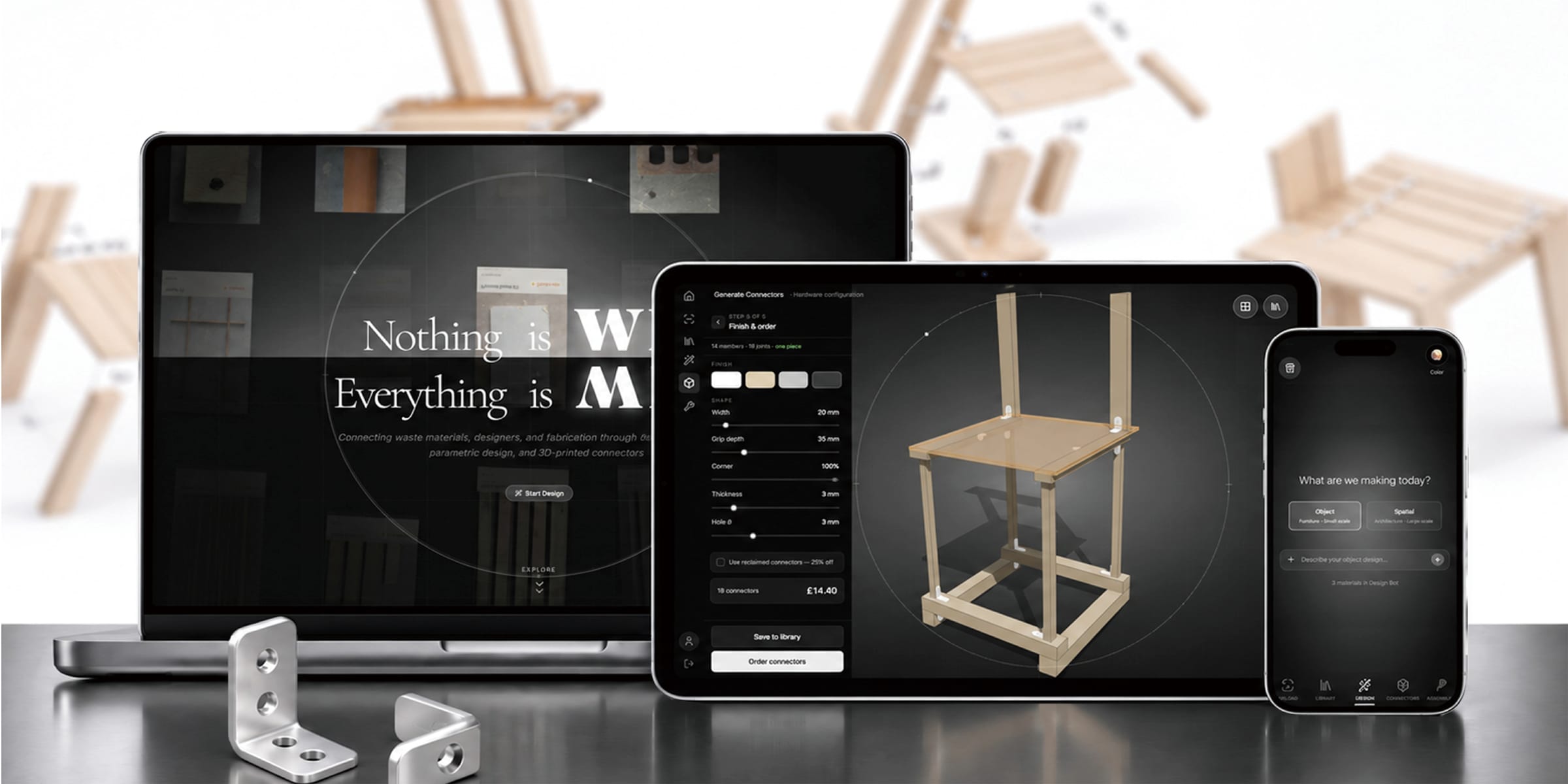
Palimpsest became a place where many of these explorations came together.
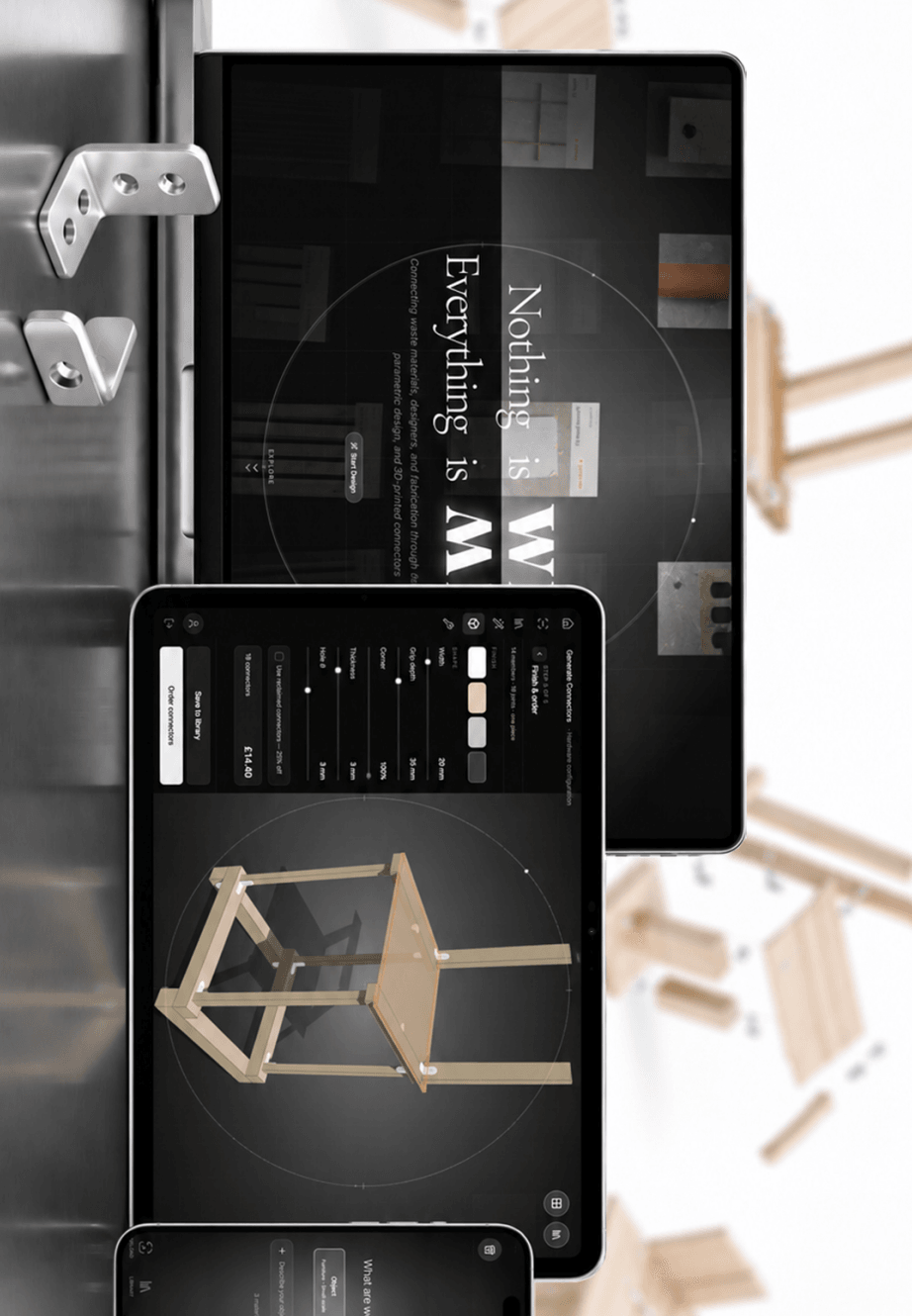
I approached material reuse with an architect’s understanding of physical constraints, structured the process with product thinking, used AI and computational tools to digitise the workflow, and learned UI/UX and vibe coding to turn it into something others could actually use.
AI lowered the technical barrier for me to build the platform.
The platform, in turn, tries to lower the design barrier for someone else.
That relationship has become one of the questions I want to keep exploring.
07 / 2026 →
Still Exploring.
Technology is changing what designers can make, who can make it, and how quickly an idea can become real.
I’m excited by that change, while still questioning what becomes uniquely valuable when tools and technical capabilities are increasingly accessible.
I don’t think I have found a final answer yet.
I’m still exploring where I can contribute — somewhere between architecture, technology, products and the people who use them.